How to Get Your Chickens Ready for Winter: A Practical Guide for a Happy, Healthy Flock
There’s always that first chilly morning of the year when I walk outside to let the chickens out and think…
Yep. Winter is coming.
The air is crisp, the grass is soaking wet, daylight is disappearing way too early, and suddenly all those little coop projects I’ve been putting off feel a lot more urgent.
Thankfully, chickens are surprisingly hardy little creatures. Most healthy, fully feathered adult chickens can handle cold temperatures much better than we sometimes give them credit for. In fact, cold and dry is generally much easier on chickens than cold, damp, and drafty conditions.
And here in the Pacific Northwest, damp is definitely something we know a thing or two about.
Preparing chickens for winter isn’t about turning their coop into a heated chicken apartment. It’s about giving them a dry, well-ventilated, predator-resistant place to sleep, unfrozen water, adequate food, protection from harsh weather, and a little extra attention during those dark winter months.
So before the rain, wind, frost, snow, and mud arrive, here are the things I like to think about when getting the chicken coop and flock ready for winter.
Start With a Good Fall Coop Cleaning
Before winter really sets in, give the coop a good cleaning.
Remove old bedding, scrape down dirty areas, clean nesting boxes, check roosting bars, and look around for anything that needs repairing.
This is also a perfect opportunity to look for signs of mites, rodents, moisture, mold, or other problems you don’t want to discover in the middle of January.
Add fresh, dry bedding when you’re finished.
Whether you use pine shavings, chopped straw, hemp, or another chicken-safe bedding, the most important thing is keeping it dry.
Because winter + chickens + wet bedding?
No thank you.
Check the Coop for Leaks
This is especially important if you live somewhere with wet winters.
Wait for a rainy day and actually go inside the coop.
Look around.
Is water dripping from the roof?
Are the walls getting wet?
Is rain blowing through a window?
Is water pooling around the entrance?
A tiny summer leak can turn into a big winter moisture problem.
Repair roofing, seal inappropriate gaps, and redirect water away from the coop before the weather gets worse.
But Don’t Seal Up the Coop!
This is probably one of the biggest mistakes people can make when preparing chickens for winter.
You want to block direct drafts at roost level, but you don’t want to eliminate ventilation.
Chickens produce moisture simply by breathing. Add droppings and damp bedding, and humidity can build surprisingly quickly inside a closed coop.
That moisture needs somewhere to go.
Ideally, ventilation openings should be above the chickens while they’re roosting, allowing warm, humid air to escape without cold air blowing directly across the birds.
If you walk into your coop on a cold morning and it smells strongly of ammonia or you see condensation inside, that’s a sign to take another look at ventilation and moisture.
Check Your Roosting Bars
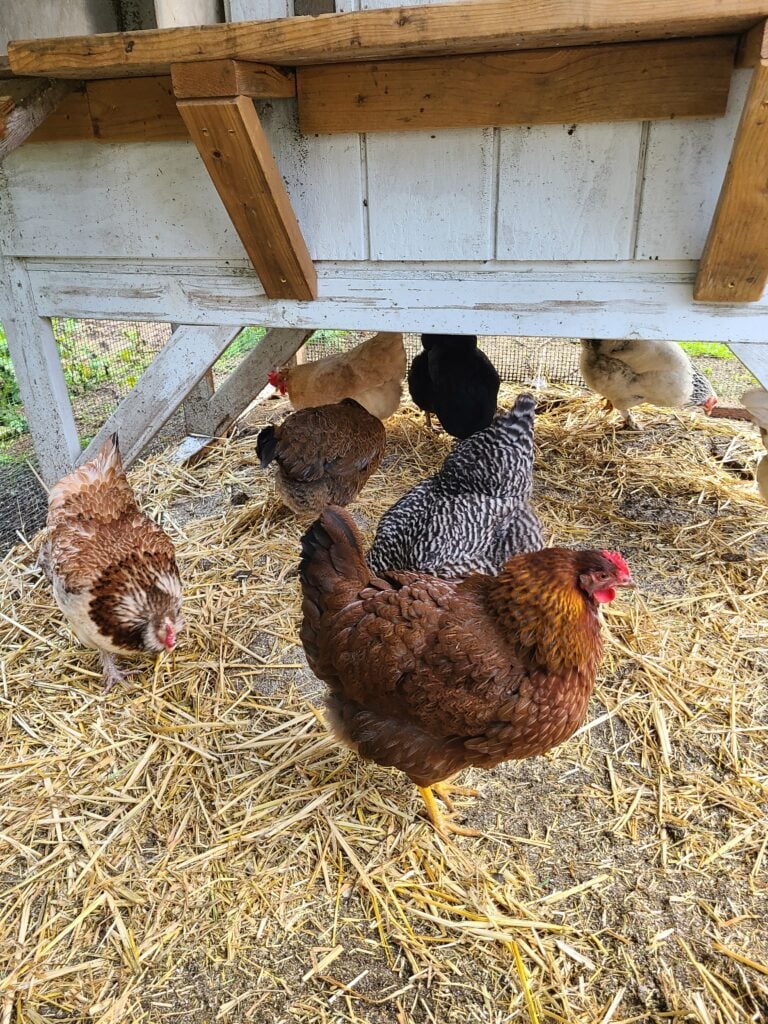
On cold nights, chickens fluff up their feathers and settle onto their roosts.
A properly sized roost allows them to sit down and cover their feet with their feathers, which helps protect their toes from cold temperatures.
Make sure there is enough roosting space for everyone and that the bars are secure.
Winter is definitely not when you want the flock fighting over the one good sleeping spot.
Prepare for Frozen Water
If you only take one thing away from this post, make it this:
Chickens need access to fresh water in winter.
And frozen water is one of the most annoying parts of winter chicken keeping.
Ask anyone who has carried a frozen chicken waterer into the house at 7 a.m.
Depending on your climate and setup, you may want to use a heated poultry waterer or heated water base that’s specifically designed for the purpose. I’ve also found this heated pet bowl works wonderfully too!
If electricity isn’t available, you may need to swap waterers throughout the day.
Or have a water pitcher you can pour hot/warm water into the waterer, also try the trick of adding table salt & warm water into a disposable bottle, with the lid closed add it into your waterer.
Either way, figure out your system before the first hard freeze.
And always follow the manufacturer’s directions for heated equipment and outdoor electrical connections.
Stock Up on Chicken Feed
Chickens still need a complete, nutritionally balanced poultry feed during winter.
Don’t replace their regular diet with corn, scratch grains, kitchen scraps, or treats simply because it’s cold.
Treats should stay treats.
You may notice your flock eating more during colder weather because maintaining body temperature requires energy.
I like having a little extra feed stored before bad weather arrives so I’m not making an emergency trip to the feed store during a winter storm.
Store it somewhere dry and rodent-proof. A steel trash can works great!
Because apparently mice also believe in stocking the pantry for winter.
Don’t Forget the Grit
If your chickens eat anything besides commercial feed—especially when frozen or snow-covered ground prevents them from finding natural grit—make sure appropriate poultry grit is available.
Chickens don’t have teeth, so grit helps their gizzards grind harder foods.
And yes, somehow chickens can eat without teeth while I can’t make it through dinner without dropping food on myself.
Life is unfair.
Prepare for the Great Winter Egg Slowdown
Don’t panic if your egg basket isn’t as full during winter.
Shorter daylight hours naturally affect egg production, and many hens slow down or stop laying for a period.
Molting can also dramatically decrease egg production.
Your chickens aren’t broken.
They’re just chickens being chickens.
Some flock owners use supplemental lighting to maintain production, while others allow their hens to follow the natural seasonal cycle. We start stock piling our eggs during the Fall to allow our ladies to have a break.
If you do use supplemental lighting, research appropriate poultry lighting practices and make fire safety an absolute priority.
Get Ready for MUD
Pacific Northwest chicken keepers, this section is for us.
There is winter.
And then there is mud season.
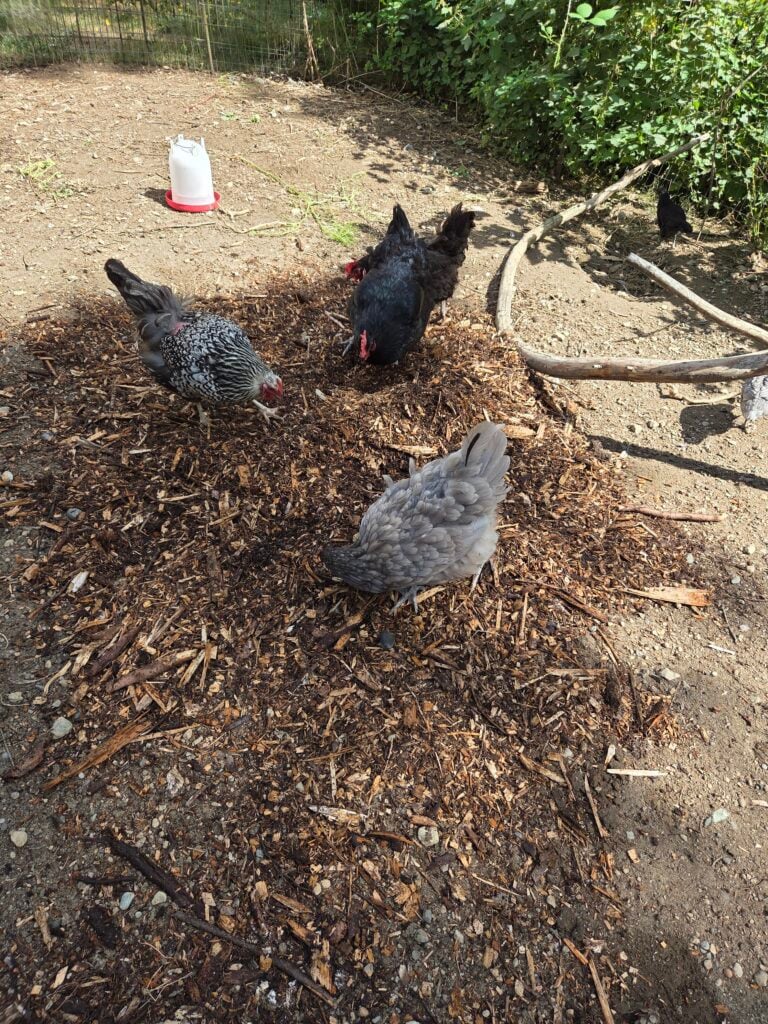
If your chicken run turns into a giant puddle every year, start working on it before the rain really arrives.
Look at where water enters and where it drains.
You might need to:
- Redirect roof runoff.
- Add gutters to the coop.
- Improve drainage around the run.
- Cover part of the run.
- Add suitable coarse organic material or another appropriate footing to high-traffic areas.
- Move feeders and waterers away from chronically wet spots.
Keeping chickens completely mud-free during a PNW winter might be asking for a miracle.
But there’s a big difference between some mud and chickens living in a swamp.
Give Them a Covered Outdoor Area
One of the best things you can provide during wet or snowy weather is somewhere chickens can still get outside while remaining somewhat protected.
A covered run or even a partially covered section gives them somewhere to scratch, dust around, eat, and complain about you without standing in pouring rain.
Because they will complain.
They’re chickens.
It’s part of their charm.
Create a Winter Dust-Bathing Spot
Chickens still want to dust bathe during winter, but their favorite summer dust-bathing hole may turn into a mud puddle.
Providing a dry area with loose soil or another appropriate dust-bathing substrate lets them continue this natural behavior.
It’s also endlessly entertaining to watch.
One chicken starts dust bathing and suddenly everybody wants the exact same spot.
Check Your Predator Protection
Winter can increase pressure from hungry wildlife, so fall is a great time for a full coop-security inspection.
Walk around the entire coop and run.
Look for loose hardware cloth, damaged fencing, gaps around doors, weak latches, digging around the perimeter, holes near the roofline, or anything else that could become an entry point.
Remember that chicken wire is primarily intended to contain chickens—not necessarily stop determined predators.
For vulnerable openings, sturdy hardware cloth and secure construction are generally better choices.
And don’t forget the door.
If you’re relying on an automatic chicken door, check the batteries and operation before winter.
Keep an Eye on Combs and Wattles
Breeds with large combs and wattles may be more susceptible to frostbite during very cold conditions.
The biggest things you can do to reduce the risk are maintaining a dry coop, good ventilation, protection from direct drafts, and appropriate shelter.
Check your chickens regularly during periods of extreme cold.
If you notice concerning discoloration, swelling, tissue damage, or a chicken behaving abnormally, contact a veterinarian familiar with poultry.
Think Twice Before Heating the Coop
It can be tempting to heat the chicken coop when temperatures drop.
They’re our animals. Of course we want them comfortable!
But healthy, acclimated, cold-hardy adult chickens often don’t need a heated coop in ordinary winter conditions.
Heating can also introduce serious fire hazards, especially around dry bedding, feathers, dust, and wooden structures.
Heat lamps deserve particular caution.
There are circumstances where additional warmth may be appropriate—young chicks, sick or injured birds, unusually severe weather, or certain breeds may need different care—but that’s different from automatically heating a normal adult flock all winter.
When in doubt, talk with a poultry-savvy veterinarian or your local extension office about conditions in your specific climate.
Watch Your Chickens, Not Just the Thermometer
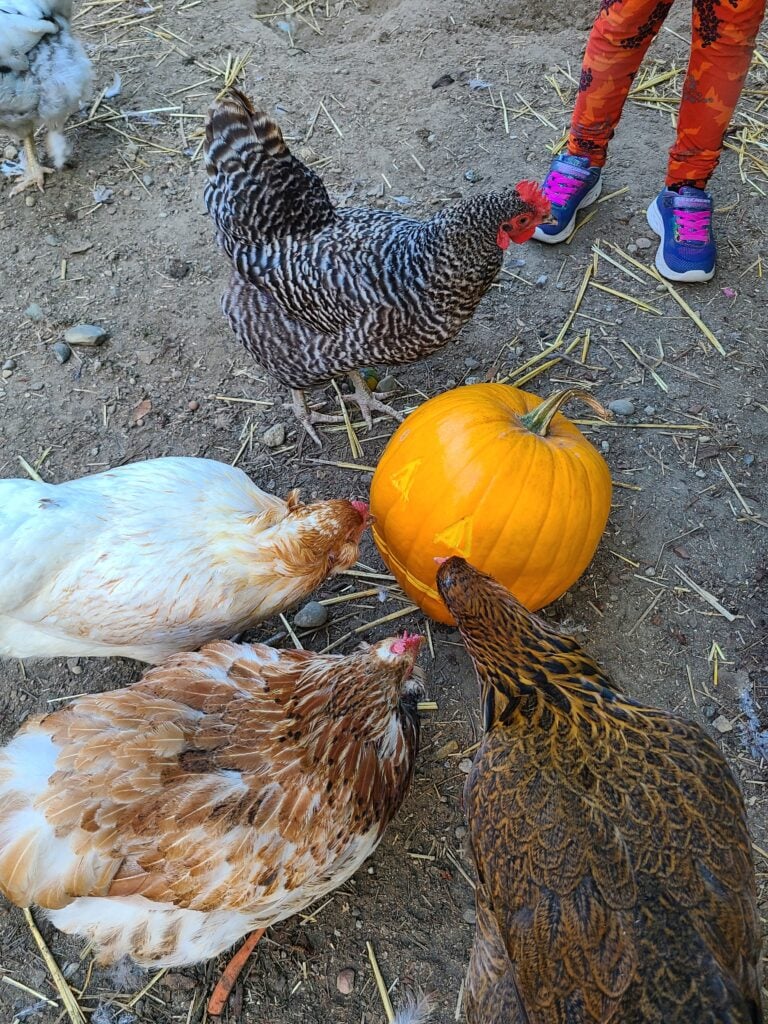
One of the best winter-management tools is simply paying attention.
Every morning when you let your flock out, look at them.
Is everyone eating?
Drinking?
Walking normally?
Are their feathers in good condition?
Is anyone staying by themselves?
Does someone look unusually puffed up or lethargic?
Are combs looking healthy?
Do you see signs of mites or lice?
Chickens can hide illness surprisingly well, so knowing what “normal” looks like for your flock makes it easier to notice when something isn’t right.
Give Them Something to Do
Winter can be downright boring for chickens.
The bugs disappear.
The garden closes.
The grass stops growing.
And sometimes the weather keeps everyone close to the coop.
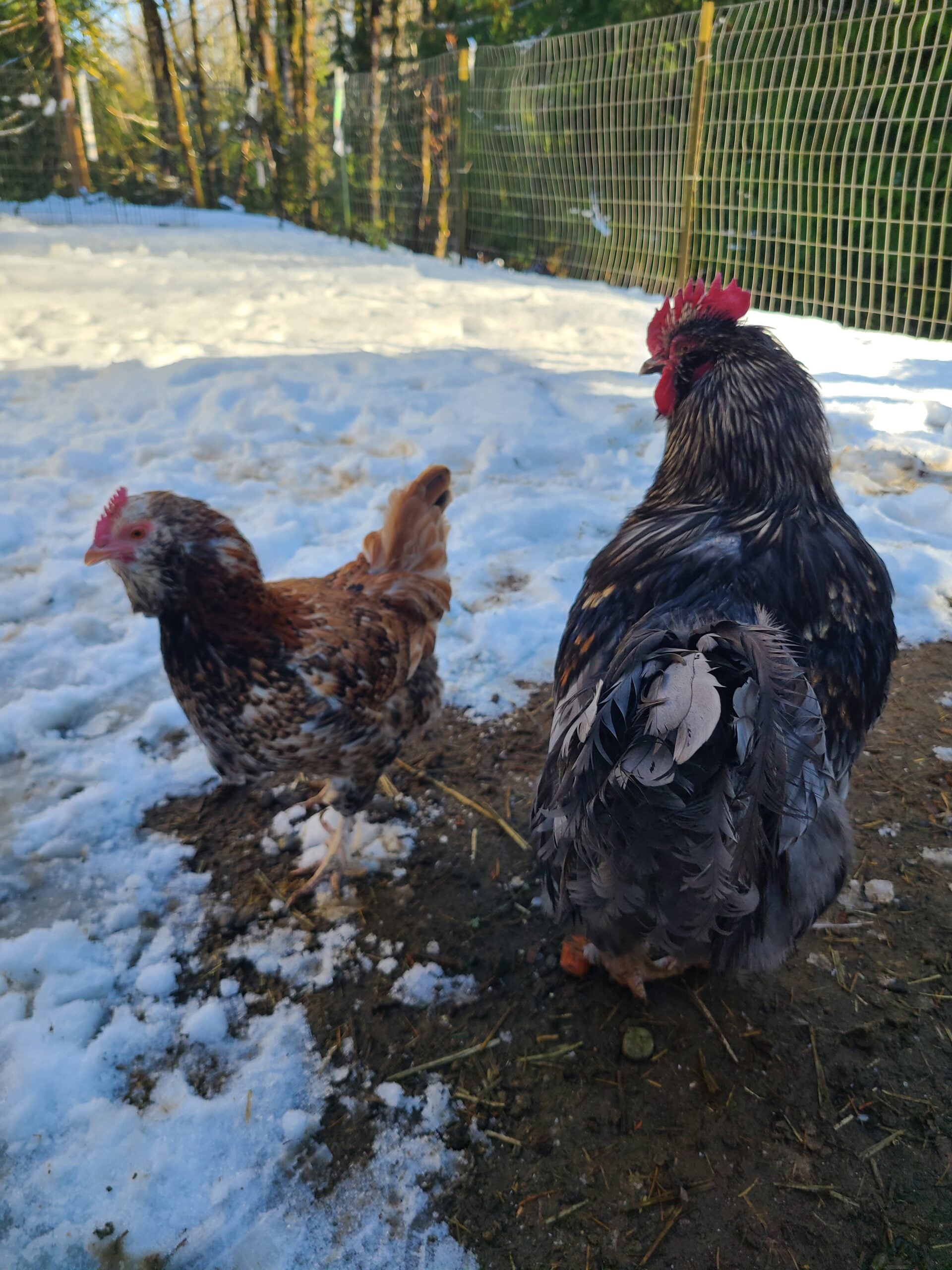
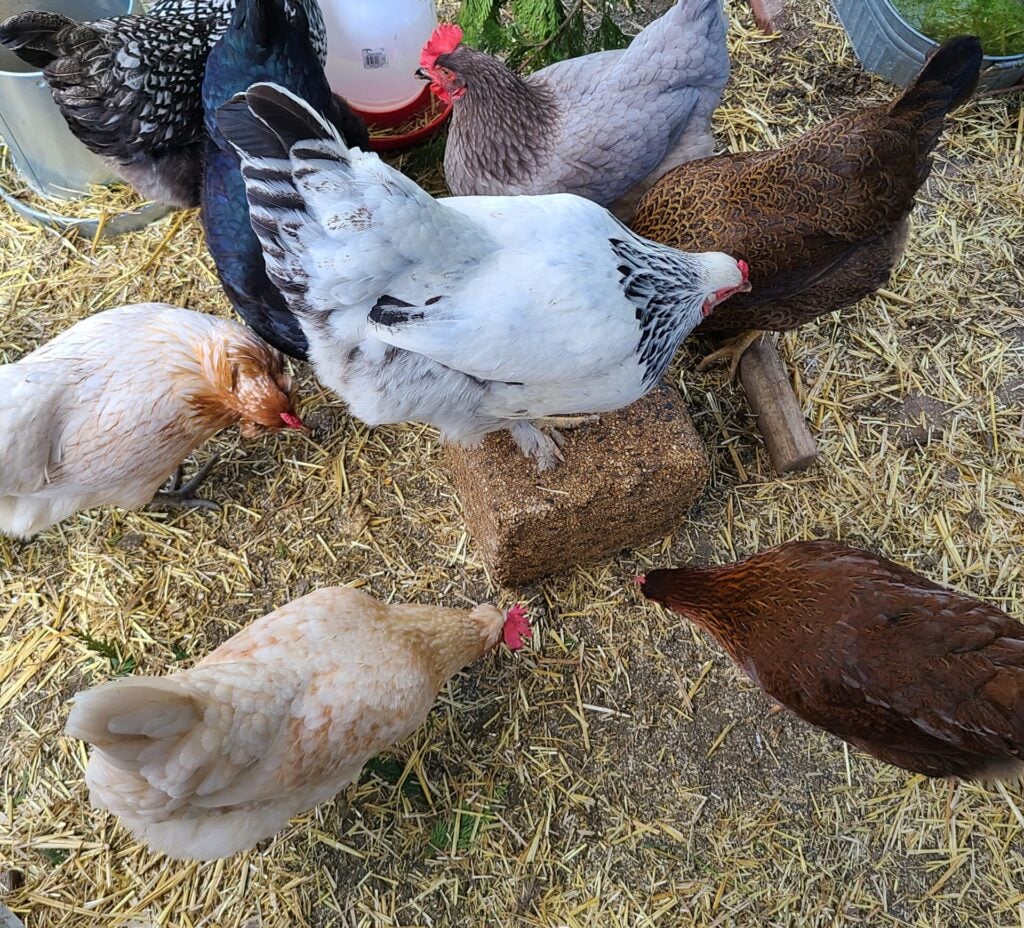
You can make their winter environment more interesting with things like sturdy branches or additional roosts, hanging appropriate vegetables, piles of leaves to scratch through, chicken-safe enrichment activities, or simply giving them access to an interesting covered area. Our chickens have access to a flock block everyday.
You don’t need to create a chicken amusement park.
Although I’m pretty sure I’d watch that.
Keep a Winter Chicken Emergency Kit
I love having basic chicken supplies together so I’m not hunting for them when something happens.
Your kit might include things such as spare feeder/waterer parts, poultry electrolytes for situations where they’re appropriate, basic wound-care supplies recommended for poultry, disposable gloves, clean towels, a pet carrier or crate for temporary isolation or transport, and contact information for a veterinarian who treats poultry.
A few more items in ours:
- Elector PSP
- Safe-Guard AquaSol – because our area is so wet, we try to deworm our chickens twice a year
- Probiotics
- Poultry Dust
- VetRX
- Care Spray
- Apple Cider Vinegar – I put some in their plastic water containers year round
It’s also smart to have extra feed and bedding on hand when a winter storm is forecast.
What About Snow?
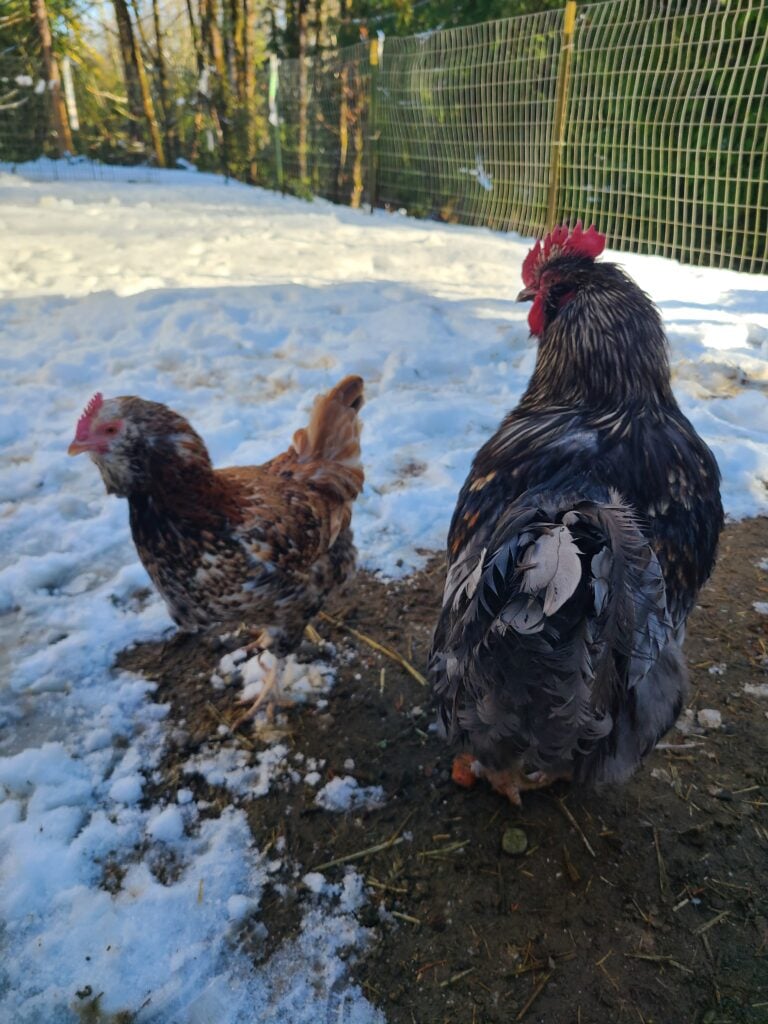
Some chickens take one look at snow and decide:
Absolutely not.
Others march straight through it.
If your chickens aren’t interested in walking on snow, you can clear a small area or create a protected pathway to encourage them to come outside.
Give them access to shelter, food, and water and let them decide how adventurous they’re feeling.
A Simple Winter Chicken Checklist
Before your first stretch of genuinely cold weather, I’d make sure you’ve covered these basics:
- Clean the coop and replace wet or dirty bedding.
- Repair roof leaks and water intrusion.
- Maintain good ventilation without direct drafts over roosting birds.
- Check roosts and nesting boxes.
- Inspect the entire coop and run for predator vulnerabilities.
- Figure out how you’ll prevent or manage frozen drinking water.
- Stock extra feed and bedding.
- Prepare the chicken run for rain and mud.
- Create a covered outdoor area if possible.
- Provide a dry dust-bathing area.
- Check fences, gates, latches, and automatic doors.
- Redirect roof runoff away from the run.
- Watch chickens closely during cold snaps.
- Have basic emergency supplies ready.
You don’t need a fancy setup.
You need a dry, secure, ventilated coop and healthy chickens with food and fresh water.
That’s the foundation.
Chickens Are Tougher Than We Think
One of the things I love about keeping chickens is realizing just how capable these little birds are.
We sometimes look outside on a freezing morning wrapped in three layers, a hat, gloves, and boots and think:
Surely the chickens are freezing.
Meanwhile, they’re standing at the coop door yelling because breakfast is four minutes late.
Preparing your chickens for winter isn’t about keeping them warm like they’re living inside your house.
It’s about setting them up to handle the season naturally.
Keep them dry.
Keep their coop ventilated.
Give them quality feed and fresh water.
Protect them from predators and extreme weather.
And keep an eye on your flock.
Once you’ve taken care of those things, you can head inside, make yourself something warm, and watch the rain from the window while your chickens scratch happily around their covered run.
Because if there’s one thing I’ve learned about keeping chickens in the Pacific Northwest, it’s this:
The chickens can handle winter.
It’s the mud that tests us.