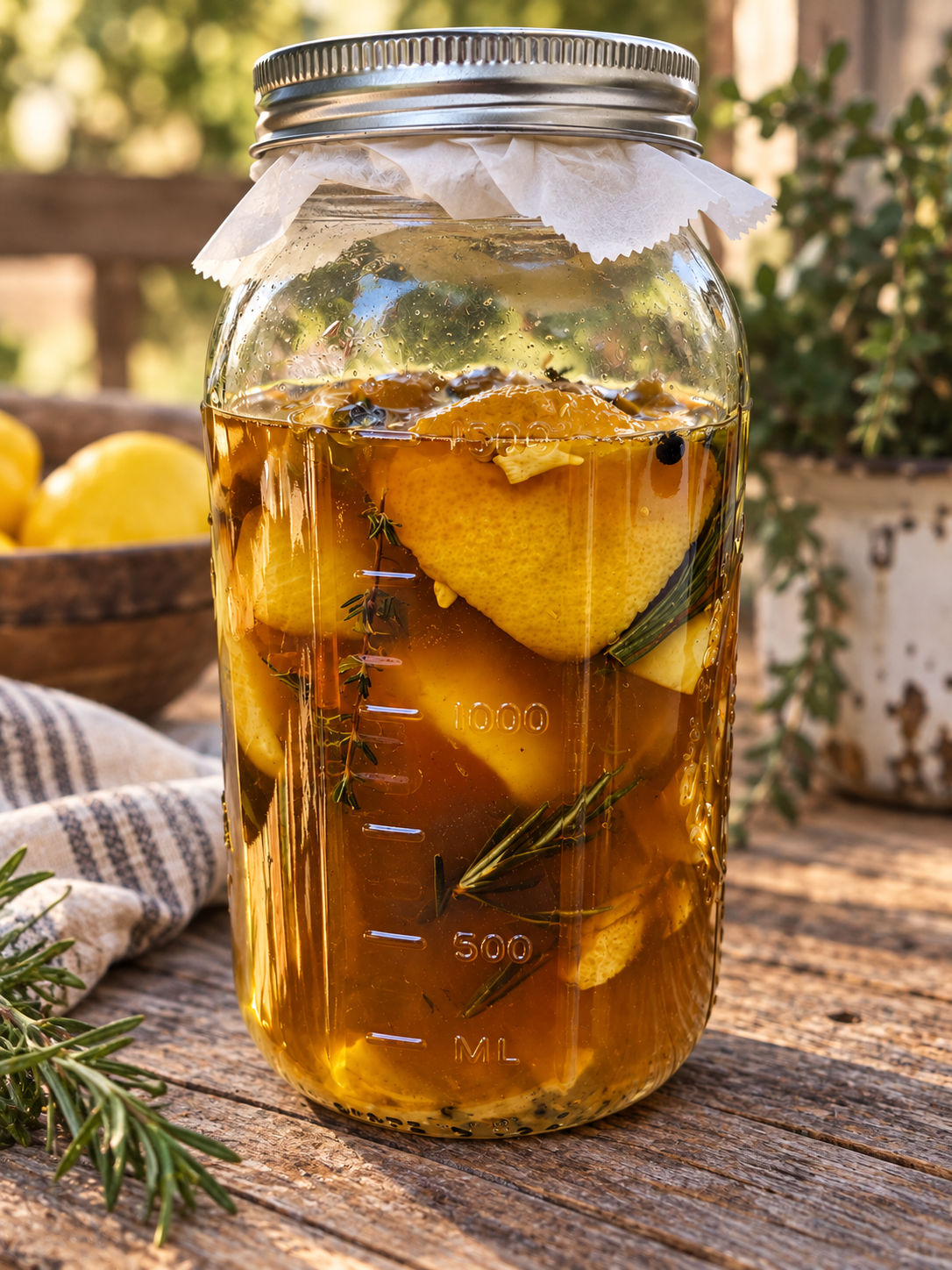
How to Make Fire Cider: An Old-Fashioned Tonic for Your Fall Pantry
There are certain things that just feel like fall to me.
Bread baking. Herbs drying. Apples piled on the counter. Soup simmering on the stove.
And lately, jars of homemade goodness taking over every available inch of my kitchen.
Fire cider fits right in.
If you’ve spent any time in the homesteading, herbal or old-fashioned-living world, you’ve probably come across this fiery mixture of apple cider vinegar, garlic, onion, ginger, horseradish, hot peppers and other herbs and spices.
It’s spicy. It’s tangy. It’s definitely going to wake you up.
And it’s surprisingly easy to make at home.
But before we get into the recipe, let’s talk about what fire cider actually is—and what it can realistically do for you.
A quick note: Fire cider is a traditional food-based herbal preparation, not a proven treatment or cure for colds, flu or other illnesses. Some individual ingredients have been studied for potential health effects, but that doesn’t mean a jar of fire cider has been clinically proven to prevent or treat illness.
What Is Fire Cider?
Fire cider is essentially a spicy infused apple cider vinegar tonic.
The modern fire-cider tradition is commonly associated with herbalist Rosemary Gladstar, who has described developing and teaching her version in the 1970s. Today you’ll find countless variations.
That’s part of the fun.
The basic idea is simple:
Fill a jar with pungent herbs, roots and vegetables.
Cover everything completely with apple cider vinegar.
Let it infuse.
Strain it.
Then add honey to taste.
The result is a punchy vinegar that can be taken in small amounts or—my favorite approach—actually used as food.
Think salad dressing, marinades, sauces and anywhere else you’d use a flavorful vinegar.
What’s in Fire Cider?
Recipes vary, but my basic fall batch includes:
Apple cider vinegar — the acidic base that pulls everything together.
Fresh ginger — spicy, warming and delicious.
Garlic Cloves — because apparently every homemade concoction in my kitchen eventually involves garlic.
Onion — another classic fire-cider ingredient.
Hot peppers — jalapeño, cayenne or whatever heat level you prefer.
Lemon — for a bright citrus note.
Orange — I also add oranges for extra immune-boosting nutrients
Turmeric — if I can’t find it fresh, then I add powdered. just be sure to strain it well or shake before enjoying as the powder will settle to the bottom.
Cinnamon — another optional addition that makes the mixture feel especially fall-ish.
Fresh Herbs — I add fresh rosemary, sage, and thyme.
Peppercorn — helps improve the absorption of turmeric.
Raw honey — added after straining to balance all that vinegar and heat.
Most people add fresh horseradish root to their fire cider but horseradish is one food I dislike, so I skip it.
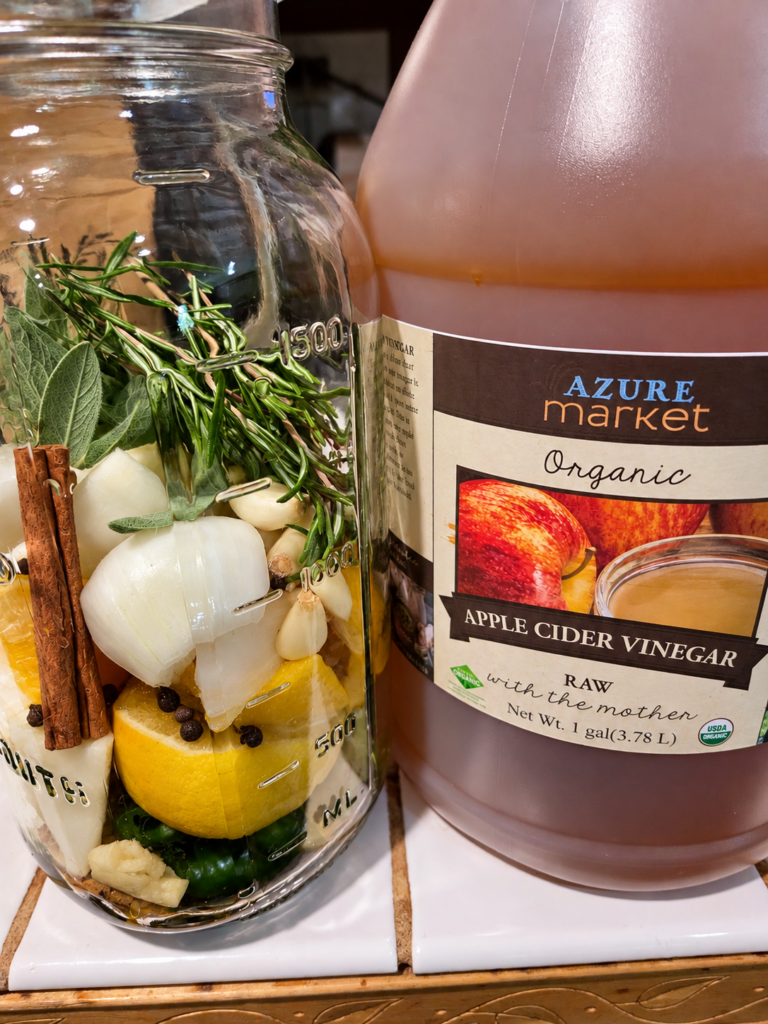
Fire Cider Recipe
You’ll Need
- 1/2 cup fresh ginger, chopped
- 1/2 cup fresh horseradish, peeled and chopped
- 1 small onion, chopped
- 8–10 garlic cloves, peeled and lightly crushed
- 1–2 jalapeños or other hot peppers, sliced
- 1 lemon, sliced
- 1 orange, sliced
- 1 small piece fresh turmeric, chopped
- 1 cinnamon stick
- 1 tablespoon whole peppercorn
- 4-6 sprigs of fresh herbs (rosemary, sage, thyme)
- Raw apple cider vinegar, enough to completely cover everything
- Raw honey, to taste after straining
- 1 clean quart-size glass jar
You don’t have to obsess over exact measurements here. The important part is keeping your solid ingredients submerged beneath the vinegar while they infuse.
How to Make Fire Cider
1. Prepare Everything
Wash your produce well.
Peel the horseradish, garlic and onion, then chop everything into relatively small pieces.
Fair warning about fresh horseradish: chopping or grating it can be POTENT.
Open a window.
2. Fill Your Jar
Add your ginger, horseradish, onion, garlic, peppers, lemon, orange, turmeric, herbs, peppercorn and cinnamon to a clean glass jar.
Don’t pack it completely solid. Leave enough room for vinegar to move around all those ingredients.
3. Add Apple Cider Vinegar
Pour apple cider vinegar over everything until the ingredients are completely covered.
Leave a little headspace at the top.
Vinegar can react with some metal lids, so use a nonreactive lid or place parchment/wax paper between the jar and a metal lid.
4. Let It Infuse
Seal the jar and store it in a cool, dark place.
Let it infuse for roughly 3–4 weeks, giving the jar a gentle shake regularly and burping it.
Keep an eye on the ingredients and make sure everything stays covered by vinegar.
And don’t forget to label the jar with the date!
Otherwise, three weeks from now you’ll be staring at it thinking…
“When did I make this?”
Ask me how I know.
5. Strain
When you’re happy with the flavor, strain the liquid through a fine-mesh strainer or cheesecloth.
Press the solids to get as much liquid out as possible.
6. Add Honey
Now add honey to taste.
Start with a small amount and keep tasting.
You’re not necessarily trying to make it sweet. You’re just balancing that sharp vinegar and fiery heat.
Pour your finished fire cider into a clean bottle or jar and refrigerate it for quality and freshness.
So…What Are the Benefits of Fire Cider?
This is where I think we need to separate traditional use from what research has actually demonstrated.
You’ll see some pretty enormous claims online about fire cider “boosting immunity,” preventing colds, detoxifying the body or fighting infections.
I’d be careful with those claims.
There isn’t strong clinical evidence showing that fire cider itself prevents or cures colds or flu.
That doesn’t make it useless.
Far from it.
It’s Made With Nutrient-Rich Foods
Garlic, ginger, peppers, citrus, onions, herbs, honey, and turmeric are all foods containing various plant compounds and nutrients.
Using them regularly in your diet can be one delicious way to add more variety and plant foods to what you’re eating.
Ginger Has Been Studied Quite a Bit
Ginger has a long history of culinary and traditional use, and research has found evidence supporting ginger for certain types of nausea.
That’s much more specific—and more useful—than simply saying ginger “boosts your immune system.”
Garlic Is More Than Just Flavor
Garlic contains sulfur-containing compounds and has been studied for several potential cardiovascular and metabolic effects.
That doesn’t turn fire cider into medicine, but garlic is certainly a flavorful ingredient worth keeping in the kitchen.
Apple Cider Vinegar Has Some Interesting Research
Vinegar has been studied for its possible effects on blood sugar after meals, although it isn’t a substitute for diabetes treatment and isn’t appropriate for everyone.
Apple cider vinegar is also highly acidic, which is one reason I prefer using fire cider as a condiment or diluted ingredient rather than repeatedly taking straight shots of it.
Your teeth may appreciate that decision too.
Lemon & Orange
Lemon & Orange adds a bright, tangy flavor to fire cider while providing vitamin C and antioxidant plant compounds, including citrus flavonoids. Vitamin C supports normal immune function, and using some of the peel adds fragrant citrus oils and even more flavor. Just be sure to wash the citrus well before adding it to your jar.
Fresh Herbs
Herbs such as rosemary, sage and thyme bring loads of flavor along with naturally occurring plant compounds. Rosemary contains compounds such as rosmarinic acid, while sage and thyme contain their own antioxidant-rich phytochemicals. They’ve also been used traditionally in seasonal herbal preparations. I like adding them to fire cider because they turn a basic vinegar infusion into something much more fragrant, savory and garden-inspired.
Turmeric
Turmeric gives fire cider its gorgeous golden color and adds an earthy, slightly peppery flavor. Its best-known compound, curcumin, has antioxidant and anti-inflammatory properties and has been widely studied for its potential role in supporting overall health. Curcumin isn’t absorbed particularly well on its own, which is why pairing turmeric with black pepper is popular—piperine in black pepper can significantly increase curcumin absorption. Turmeric isn’t a cure for colds or inflammation, but it’s a flavorful, plant-rich addition that fits beautifully into homemade fire cider.
Peppercorns
Yes—peppercorns have something to offer too! Black pepper contains piperine, the compound responsible for much of its signature bite. Piperine has antioxidant and anti-inflammatory properties in laboratory research and is particularly interesting because it can increase the absorption of curcumin, a compound found in turmeric. So if you’re putting turmeric in your fire cider, a few cracked black peppercorns make a particularly nice pairing.
Hot Peppers
Hot peppers such as jalapeños or cayenne give fire cider its signature kick. They contain capsaicin, the compound responsible for their heat, which has been studied for antioxidant, anti-inflammatory, and pain-related effects. Peppers also provide vitamin C and other plant compounds. Plus, that fiery heat can certainly make your nose run—which may temporarily make you feel less stuffy!
Cinnamon Stick
Cinnamon adds warmth and a little natural sweetness to balance all those sharp, spicy flavors. It contains antioxidant plant compounds and has been studied for possible effects on blood sugar regulation and metabolic health, although research results vary and cinnamon shouldn’t be considered a treatment for diabetes or other conditions. For fire cider, I especially love the cozy fall flavor it brings.
Honey
Honey helps mellow everything while adding its own potential benefits. Honey has antioxidant and antimicrobial properties, and evidence supports honey as a soothing option for coughs in adults and children over age one. Add it after you’ve strained your fire cider so you can sweeten it exactly to your liking. And remember: honey should never be given to babies under 12 months.
Horseradish
Horseradish is what gives fire cider some of its unmistakable sinus-clearing kick! It contains compounds called glucosinolates, which break down into pungent isothiocyanates when the root is chopped or grated. These compounds have shown antioxidant and antimicrobial activity in laboratory research, although that doesn’t mean horseradish treats infections. Its strong aroma and heat can also temporarily make your nose run and give the sensation of clearer nasal passages—plus it adds that wonderfully fiery bite that makes fire cider live up to its name.
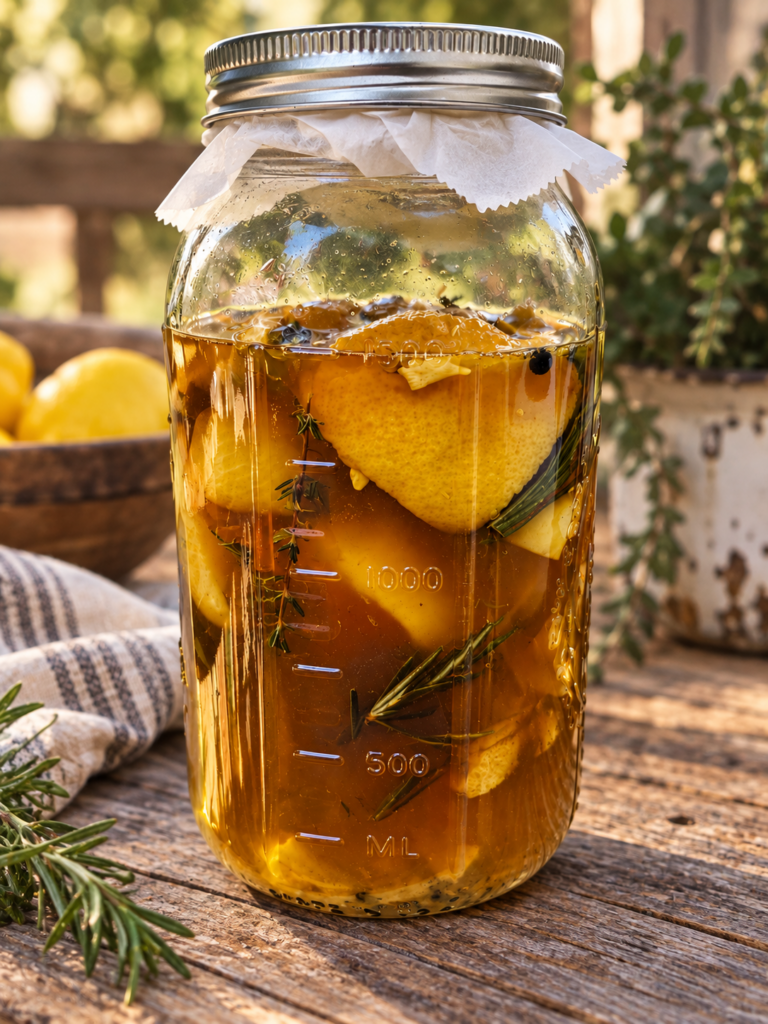
How I Use Fire Cider
You absolutely do not have to stand at the counter and dramatically take a shot of fire cider every morning.
I actually think it’s more fun when you treat it like a really flavorful infused vinegar.
Try a splash:
- Mixed with olive oil for salad dressing
- Stirred into soups or chili
- Added to marinades
- Mixed into sauces
- Splashed over roasted vegetables
- Added to coleslaw
- Diluted into warm water with additional honey
- Mixed into homemade vinaigrettes
If you want to drink it, dilute a small amount in water rather than drinking highly acidic vinegar straight.
A Few Fire Cider Precautions
Natural doesn’t automatically mean appropriate for everyone.
Apple cider vinegar can irritate the throat and digestive tract and can damage tooth enamel when consumed undiluted. Some ingredients or larger amounts may also interact with medications or aggravate conditions such as reflux.
If you’re pregnant, taking medications, managing diabetes or another medical condition, or making it for children, it’s worth checking with an appropriate healthcare professional first.
And fire cider should never replace medical care when you’re actually sick.
Turn It Into a Fall Kitchen Tradition
This is what I really love about projects like fire cider.
It’s not just about the finished jar.
It’s about spending a rainy fall afternoon chopping roots and herbs at the kitchen table.
It’s about learning what ginger and horseradish actually look and smell like when they’re fresh.
It’s about filling the pantry and refrigerator with things you made yourself.
And it’s about keeping some of those old kitchen skills alive.
Make a loaf of bread.
Start your garlic honey.
Dry the last herbs from the garden.
Put soup in the freezer.
And make a jar of fire cider.
Suddenly your kitchen starts looking like you’re preparing for a 19th-century winter.
And I’m kind of here for it.
What You Need to Make Fire Cider
Shop Quart Mason Jars → HERE
Shop Non-Metal Mason Jar Lids → HERE
Shop Fine-Mesh Strainers → HERE
Shop Apple Cider Vinegar → HERE
Shop Raw Honey → I strongly suggest buying your raw honey locally, but if you can’t do that – I LOVE Azure Standard for their quality and prices!
Will I tell you fire cider is a magical potion that means you’ll never get sick again?
Nope.
But will I happily keep making this spicy, vinegary concoction as part of my fall kitchen?
Absolutely.
It’s inexpensive, customizable, made from everyday ingredients and gives you another way to use garlic, ginger, peppers, herbs and honey.
Plus there’s something wonderfully old-fashioned about seeing a big jar of roots, herbs and vinegar infusing on the counter.
Although if someone opens it expecting apple cider…
They’re in for quite the surprise.

Fire Cider
Ingredients
- 1/2 cup fresh ginger chopped
- 1/2 cup fresh horseradish peeled and chopped
- 1 small onion chopped
- 8-10 garlic cloves peeled and lightly crushed
- 1-2 jalapenos or other spicy peppers sliced
- 1 lemon sliced
- 1 orange sliced
- 1 small turmeric chopped
- 1 cinnamon stick
- 1 Tbsp whole peppercorn
- 4-6 sprigs fresh herbs rosemary, sage, thyme
- raw apple cider
- raw honey to taste
Instructions
- Wash your produce well. Peel the horseradish, garlic and onion, then chop everything into relatively small pieces.
- Add your ginger, horseradish, onion, garlic, peppers, lemon, orange, turmeric, herbs, peppercorn and cinnamon to a clean glass jar.Don’t pack it completely solid. Leave enough room for vinegar to move around all those ingredients.
- Pour apple cider vinegar over everything until the ingredients are completely covered.Leave a little headspace at the top.Vinegar can react with some metal lids, so use a nonreactive lid or place parchment/wax paper between the jar and a metal lid.
- Seal the jar and store it in a cool, dark place.Let it infuse for roughly 3–4 weeks, giving the jar a gentle shake regularly and burping it.Keep an eye on the ingredients and make sure everything stays covered by vinegar.And don’t forget to label the jar with the date!
- When you’re happy with the flavor, strain the liquid through a fine-mesh strainer or cheesecloth.Press the solids to get as much liquid out as possible.
- Now add honey to taste.Start with a small amount and keep tasting.You’re not necessarily trying to make it sweet. You’re just balancing that sharp vinegar and fiery heat.Pour your finished fire cider into a clean bottle or jar and refrigerate it for quality and freshness.