How to Make an Old-Fashioned Thanksgiving Dinner on a Budget
Thanksgiving has a way of turning “we’ll keep it simple this year” into a grocery cart full of things you hadn’t planned to buy.
A second dessert. Ingredients for a side dish someone might want. New napkins because the display was cute. And somehow, you’re still going to need another stick of butter.
I love a Thanksgiving table with homemade food, mismatched serving dishes, and enough gravy to go around. But feeding the people you love shouldn’t leave you worrying about the grocery bill.
An old-fashioned Thanksgiving dinner on a budget starts with a smaller menu, familiar ingredients, and a little planning before you shop. You can serve a meal that feels generous without making twelve side dishes or buying a whole new table setting.
Here’s how I’d put together a cozy Thanksgiving dinner with the budget in mind.
Start with the dinner your family actually wants
Before making a shopping list, ask everyone which dish they’re looking forward to.
This is useful information! If nobody cares about the sweet potato casserole, you don’t need to buy pecans, marshmallows, and a special baking dish just to keep it on the menu.
For a manageable dinner, choose:
- One main dish.
- One potato dish.
- Stuffing or dressing.
- One vegetable.
- Gravy and cranberry sauce.
- One dessert.
Add rolls if they’re a family favorite. If people are perfectly happy with stuffing and potatoes, you can skip another bread.
A smaller menu gives you more time to cook each dish and fewer half-used ingredients to find a home for afterward.
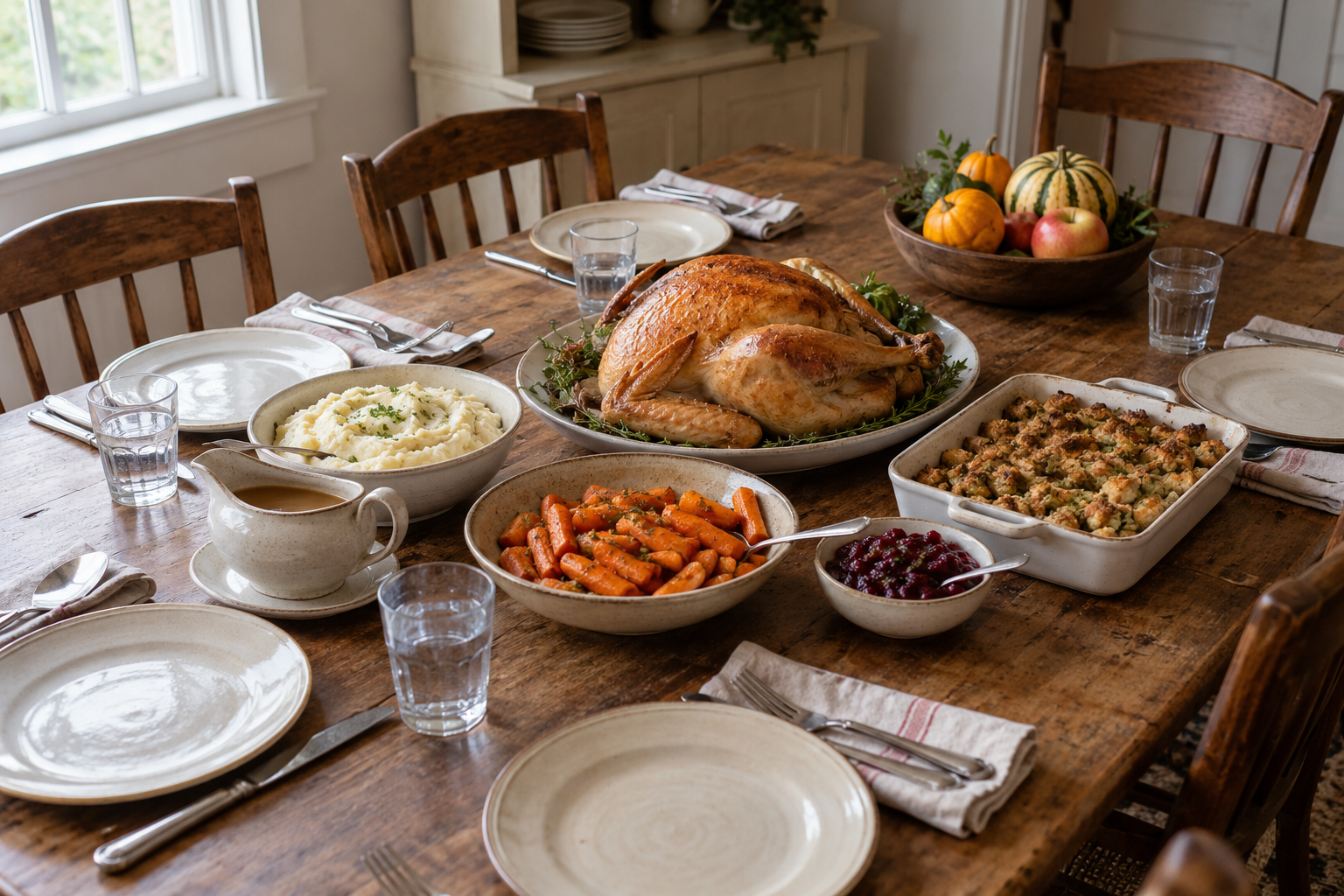
A simple old-fashioned Thanksgiving menu
This is the kind of meal I’d build around everyday ingredients:
| Dish | Budget-friendly approach |
|---|---|
| Roast turkey or chicken | Compare the total cost and choose an amount that fits your gathering |
| Mashed potatoes | Keep the additions simple: milk, butter, salt, and pepper |
| Bread dressing | Use leftover bread you’ve saved in the freezer |
| Roasted carrots | Season with oil, salt, pepper, and herbs you already have |
| Gravy | Use pan drippings and broth you have on hand, if available |
| Cranberry sauce | Choose homemade or canned based on price and preference |
| Pumpkin pie | Make one familiar recipe or ask a guest to bring dessert |
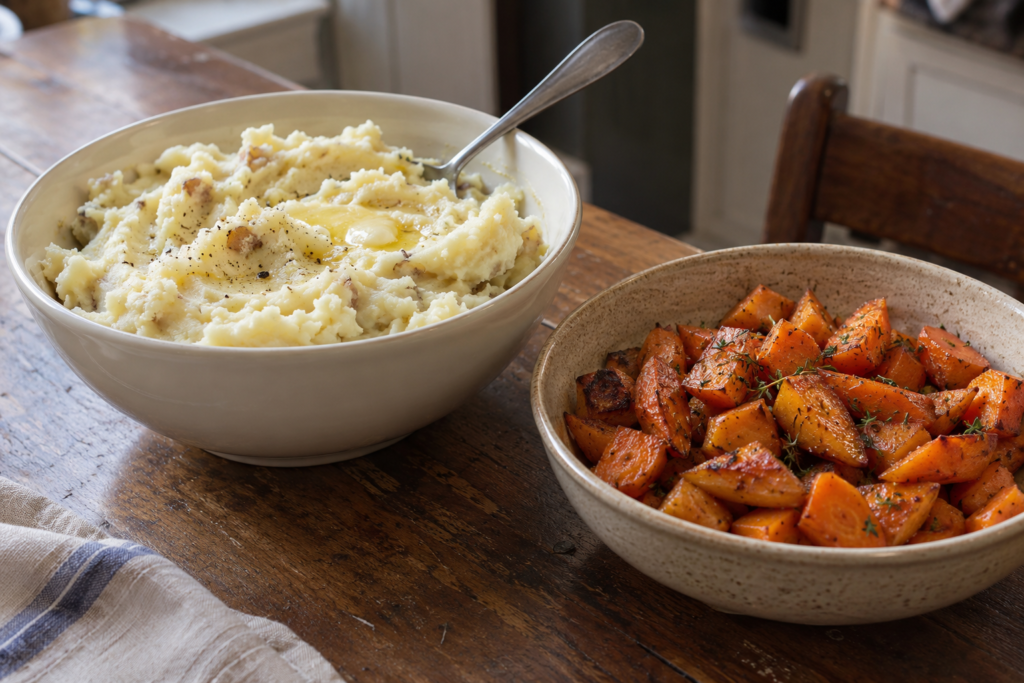
For six people, roughly three pounds of potatoes and one and a half to two pounds of carrots are a reasonable starting point alongside the rest of the meal. Adjust for appetites, children, and how many leftovers you want.
Plan the meal first, then price the shopping list. A bargain ingredient only helps if you’ll use it.
1. Check the pantry before the grocery ads
Take a look through your pantry, freezer, and refrigerator before deciding what to buy.
Check for flour, sugar, oil, butter, broth, herbs, canned pumpkin, frozen vegetables, and bread you can use for dressing. Look at how much is left, too. A nearly empty flour bag is not a holiday baking plan.
If you garden, this is a lovely time to use stored potatoes, onions, winter squash, or preserved food you already have. Those homegrown ingredients deserve a place at the holiday table.
Write down what you have, then make a list of what you still need.
2. Choose the main dish by the total cost
Turkey may be the Thanksgiving centerpiece you look forward to all year. If it fits your budget and your gathering, wonderful.
For a small dinner, though, a roast chicken or turkey breast may make more sense. Compare the total price as well as the price per pound, accounting for bones and usable servings.
A large bird can be economical when you’ll use the leftovers, but it still requires more money upfront.
Check whether advertised discounts require a minimum purchase or store membership before building your meal around them.
And if you choose chicken, serve it on your favorite platter with the potatoes, dressing, and gravy. That is a holiday dinner I’d happily sit down to.
3. Let inexpensive vegetables do some of the work
Potatoes, carrots, cabbage, and winter squash can make satisfying side dishes with very little fuss. Choose what’s affordable where you shop.
You don’t need a topping, glaze, and garnish for every vegetable. One rich side dish is plenty when you’re also serving gravy, dressing, and pie.
Simple roasted carrots
For about six side servings, you’ll need:
- 1½–2 pounds carrots.
- 1–2 tablespoons oil.
- Salt and pepper.
- Pinch of dried thyme.
- Small drizzle of honey or maple syrup.
Scrub or peel the carrots and cut them into evenly sized pieces. Toss with oil, thyme, honey or maple syrup, salt, and pepper. Spread on a baking sheet and roast at 400°F for about 25–35 minutes, stirring once, until tender. Thicker pieces may take longer.
They bring color to the table without requiring a separate shopping list.
4. Save bread for homemade dressing
A freezer bag of leftover bread can turn into one of the best parts of Thanksgiving dinner.
Save plain bread ends and leftover rolls ahead of time. Freeze them while they’re still good, then use them for your dressing. Discard moldy bread.
For a simple bread dressing, start with a trusted recipe built around bread, onion, celery, broth, butter or oil, and poultry seasoning. Bake it in a separate dish so you can manage it independently of the bird.
Sausage, nuts, and dried fruit are optional additions. If your family likes the plain onion-and-herb version, you’re already set.
Use a recipe sized for your dinner. Making a giant pan because that’s what you’ve always done can cost more than you need to spend.
5. Buy ingredients that work in several dishes
Before checking out, look for items you’re buying for just one spoonful.
Could the same onions go into the dressing and gravy? Could you use dried herbs already in the cupboard instead of several fresh herb packages? Will the milk you buy for mashed potatoes also get used at breakfast?
This is where a simple menu helps. Familiar ingredients tend to have somewhere to go after Thanksgiving.
If a recipe needs an expensive ingredient you won’t use again, choose another recipe or leave off an optional topping. You do not need to spend extra money to make a dish look like its picture.
6. Make the dishes you enjoy—and buy the rest when it makes sense
Homemade does not automatically mean cheaper, especially if you need to buy every ingredient.
Compare a pie’s full ingredient cost with the price of one you like from the store. Do the same with rolls and cranberry sauce.
Maybe you love making pie crust. Maybe you’d rather spend that time getting the house ready and use a refrigerated crust. Both work.
An old-fashioned meal can include a can of cranberry sauce. Plenty of family traditions do.
Choose a few homemade dishes you care about, then make the other decisions according to your budget and available time.
7. Give guests something specific to bring
If someone asks what they can bring, give them an answer.
“Would you bring a pumpkin pie?” is easier to act on than “Oh, anything is fine!”
You might ask one person for rolls, another for a vegetable, and someone else for drinks. Coordinate ahead so you don’t end up with four desserts and no potatoes.
For a larger gathering, a potluck can spread out both the expense and the cooking. Check dietary needs while planning so everyone has something they can enjoy.
Hosting already involves plenty of work. You can welcome people into your home and accept help with dinner.
8. Set the table with what you already own
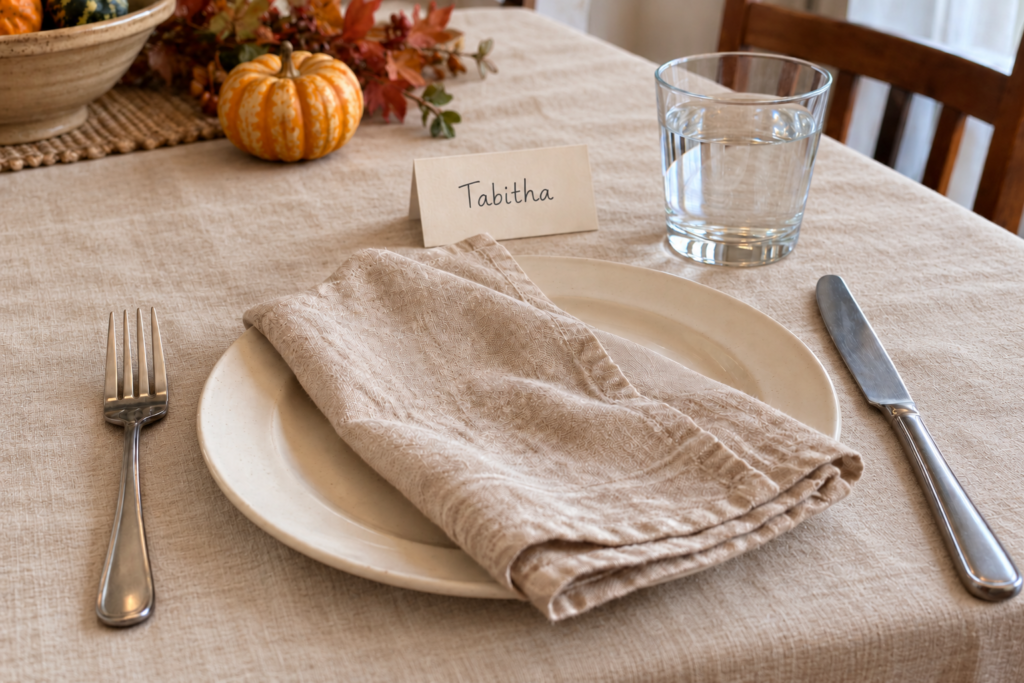
Mismatched plates, a clean tablecloth, and everyday silverware can make a beautiful Thanksgiving table.
For a simple centerpiece, try a bowl of apples, a small pumpkin you’ll cook later, or a few clipped branches arranged where they won’t touch the food. Keep decorations low enough that people can see each other.
Skip scented candles at dinner, and keep any flames well away from decorations.
Leave room for serving dishes. Moving an elaborate centerpiece onto the floor halfway through dinner rather defeats the purpose.
9. Make a plan for the leftovers before you shop
Leftovers can help stretch the cost of Thanksgiving when you actually use them.
Think about what your family will eat afterward: sandwiches, a turkey-and-vegetable soup, dressing reheated alongside a meal, or mashed potatoes turned into potato cakes.
Set aside containers before dinner and decide which portions you’ll keep for upcoming meals and which you’ll freeze promptly.
Don’t buy an oversized main dish just because you could make something with it someday. Choose the extra amount with real meals in mind.
10. Keep drinks and appetizers simple
It’s easy to focus on the dinner budget and then spend quite a bit on everything served around it.
A pitcher of water, coffee, tea, and one drink your family enjoys may be plenty. You don’t need several kinds of soda, juice, cider, and sparkling drinks unless you want them and have room in the budget.
If dinner is soon, skip a large appetizer spread. A small snack may be all you need.
Save everyone some appetite for the meal you’ve been cooking.
A little planning makes Thanksgiving Day easier
A short schedule helps you avoid trying to peel potatoes, set the table, and find the gravy boat at the same time.
A week or more before: Confirm the guest count, choose the menu, check supplies, and arrange guest contributions.
A few days before: Shop from your list, check the thawing and cooking instructions for your main dish, and plan which dishes need the oven.
The day before: Set out serving dishes, set the table if you can, and prepare anything your chosen recipes allow you to make ahead.
Thanksgiving Day: Follow your cooking schedule, accept help, and remember to sit down and eat your own dinner.
That last one can be surprisingly easy to forget.
Kitchen tools worth using—if you already have them
You don’t need special Thanksgiving equipment for every dish. A sturdy baking sheet, a suitable roasting pan, a potato masher, and a food thermometer can do plenty of work.
Use what you own, borrow something you’ll only need once, and buy only what fills an actual gap.
A Thanksgiving dinner you can enjoy, too
A warm meal, a little gravy passed around the table, and people taking their time over dessert—that sounds like a good Thanksgiving to me.
Start with your family’s favorites. Choose a menu you can afford. Let guests help. And leave a few things off the list if they’re going to make the day harder than it needs to be.
What’s the one Thanksgiving dish your family would never let you skip? Tell me in the comments—and share your favorite way to save on the meal, too!
Save this post to Pinterest for when you’re planning your Thanksgiving menu.